How DNA Fragments Regenerate Your Skin
Article 9 of 12
Polynucleotides represent a different kind of approach to skin improvement. Rather than adding volume or relaxing movement, they work at the cellular level to support and stimulate your skin's own repair processes. The results are gradual, biological, and for the right person, genuinely meaningful.
What Polynucleotides Are
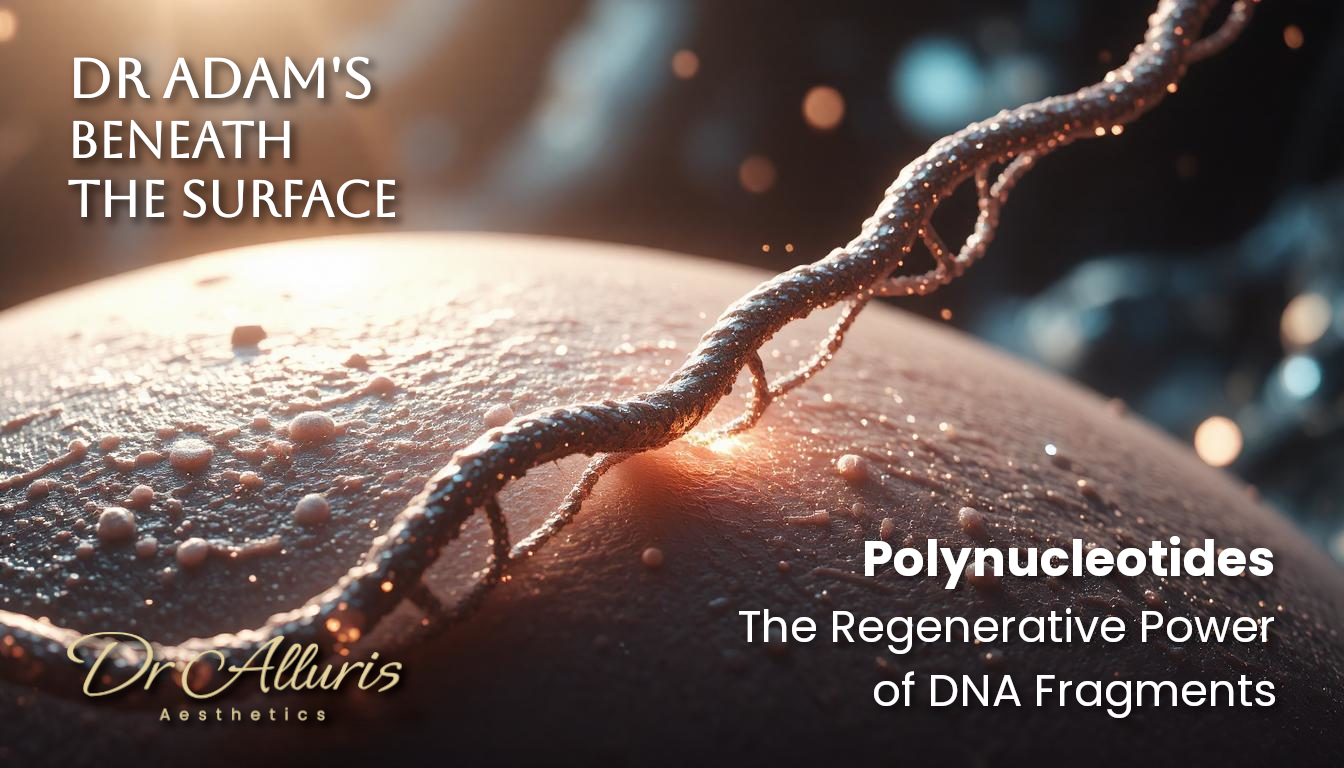
Polynucleotides are long, highly purified fragments of DNA, typically derived from salmon or trout sperm through a carefully controlled extraction and purification process. The final product is a sterile injectable solution that is biocompatible and well tolerated by human tissue.
When introduced into the skin, polynucleotides act on fibroblasts, the cells responsible for producing collagen and elastin. They also support tissue hydration at a structural level, reduce localised inflammation, and encourage the repair and renewal of cells that have been damaged by ageing, sun exposure, or environmental stress.
I use CE-marked polynucleotide formulations, including Plinest, chosen for their clinical evidence base and consistent safety profile across a broad range of skin types and concerns.
What Polynucleotides Can Address
- Fine lines and early crepey texture, particularly in delicate areas such as under the eyes and the neck
- Skin that looks dull, tired, or lacks resilience
- Loss of hydration and firmness in the face, neck, and décolletage
- Skin quality concerns following acne, scarring, or environmental damage
- Hair thinning with scalp environment enhancement to revive the weakened follicles
- Supporting and enhancing the results of other injectable treatments
Polynucleotides are not a volumising treatment and will not produce the kind of structural lift that a dermal filler or PLLA provides. Their strength is in improving the quality, health, and resilience of the skin itself, which is a different and equally valuable goal.
My Approach at Dr Alluris Aesthetics
Polynucleotide injections sit within the regenerative treatment category alongside exosome therapy and PLLA. I approach all three with the same clinical precision I carried over from neurosurgery: careful assessment of the skin, clear discussion of what is realistic, and injection technique that respects the anatomy of the area being treated.
I offer polynucleotide treatments across multiple areas including the full face, under-eye region, neck, décolletage, hands, and scalp for hair thinning. Each plan is built around what your skin actually needs rather than a fixed protocol applied uniformly. The number of sessions and intervals between them are discussed at consultation and adjusted based on how your skin responds.
What the Treatment Involves
Each session takes approximately 30 to 45 minutes. The skin is cleansed and the polynucleotide solution is administered using a fine needle across the treatment area. A topical anaesthetic is available if needed for comfort, particularly in more sensitive areas such as the under-eye or neck.
A standard course involves three sessions spaced three to four weeks apart. This interval allows each round of cellular stimulation to build progressively on the last, producing a more significant cumulative result than a single session would achieve.
After treatment, mild redness, slight swelling, or small temporary bumps at the injection sites are normal and usually resolve within 24 to 48 hours. Most people return to their usual routine the same day or the following morning.
When to Expect Results
Improvements in skin hydration and texture generally become noticeable from around three to four weeks after the first session, and continue to develop as the course progresses. The most complete result is typically visible at around 12 weeks after the final session, once the biological repair and collagen-building processes have had time to fully unfold.
This is not a treatment that produces a dramatic overnight change. It is a treatment that makes your skin measurably healthier and more resilient over time, in a way that tends to be noticed by others as you simply looking well, refreshed, or less tired, rather than as an obvious cosmetic procedure.
How Polynucleotides Compare to Exosome Therapy
Both treatments work regeneratively, but through different mechanisms. Exosomes deliver concentrated growth factors and biological signalling molecules that stimulate cellular activity. Polynucleotides provide the structural DNA building blocks that support cellular repair directly. In practice, the two can complement each other well for certain skin concerns, and this is something I explore at consultation when both options may be relevant.
For more detail on exosome therapy, the following article covers how it works and who it suits:
A Simple Next Step
If you are interested in improving your skin quality from within rather than masking concerns on the surface, polynucleotide treatment may be worth exploring. A consultation gives us the chance to assess your skin properly and discuss whether this is the right approach, either on its own or as part of a broader treatment plan.
WhatsApp Dr Adam directly on 07721 390017, or book online at drallurisaesthetics.co.uk or via the online booking page.
Consultations are available at SkinTouch, 77 Church Road, Crystal Palace SE19 2TA and at 58 South Molton Street, Mayfair W1K 5SL.
Results vary between individuals. No treatment outcomes can be guaranteed. All treatments are subject to a clinical consultation to assess suitability.